Buying a home in Bonney Lake
What to sort out about neighborhoods, the lake, the commute, school boundaries, and newer construction before you write an offer on the plateau.
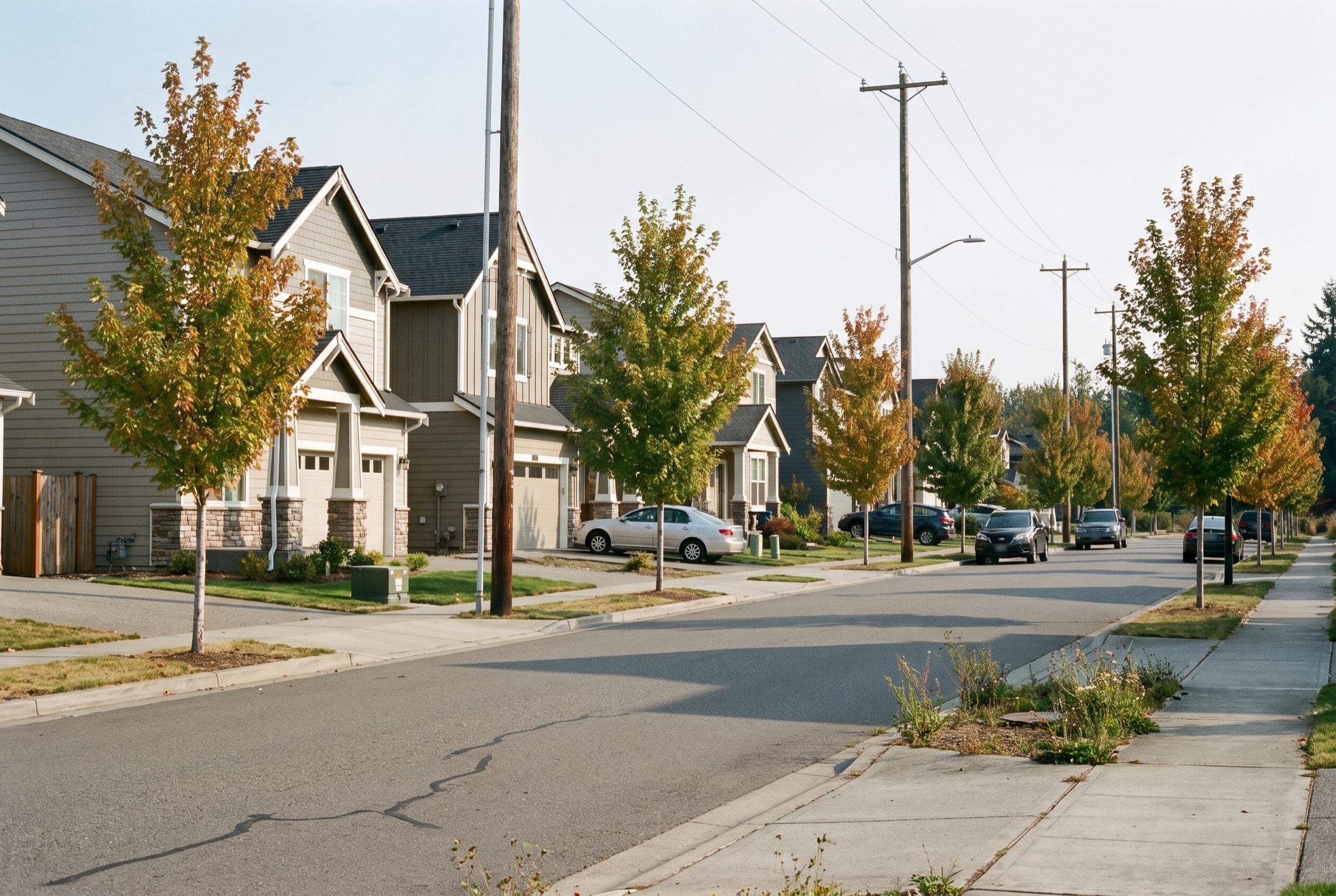
Buying in Bonney Lake mostly means choosing among newer subdivisions, older homes on larger lots, and homes on or near Lake Tapps, then weighing each one against the SR 410 commute and the school boundary it falls inside.
A lot of what people call Bonney Lake, including much of the Lake Tapps shoreline and the Tehaleh community to the south, is unincorporated Pierce County with a Bonney Lake mailing address. That decides which government issues your permits and who maintains your road.
None of this replaces a close look at one house at one address. It should help you know what to ask when you get there.
What kinds of neighborhoods are in Bonney Lake?
Roughly four kinds of places, each with its own rules and its own paperwork.
Worth checking
City limits and unincorporated county land interlock all over the plateau. Pierce County’s online parcel maps show which side a given address is on. Check before you plan a shop or an addition.
Newer subdivisions
Most of the plateau’s housing went up in the last few decades, much of it in planned subdivisions with homeowners associations, sidewalks, small neighborhood parks, and stormwater ponds. Homes tend to be two stories on modest lots, with attached garages and open main floors. Read the covenants for rules on parking, fences, sheds, RVs, exterior paint, and rentals before you write an offer, and look at the dues history along with any planned assessments.
Master-planned communities
Tehaleh, south of the city, is the big one: a master-planned community with its own trail network and parks, and more than one builder at work. Planned communities usually carry an HOA and sometimes a separate community association on top of it. Because homes there are often still being built, you may be weighing a resale house against a new one from a builder down the street, and which is the better buy depends on the lot and how soon you need to move.
Older neighborhoods and larger lots
In the older parts of town and on the roads heading east toward Buckley you’ll find ramblers and split-levels, often on bigger lots and sometimes with no HOA at all. These homes can offer more room and fewer rules. They also more often have septic systems, older plumbing and electrical, and, on some rural parcels, a private well. Price the deferred maintenance in from the start.
Lake neighborhoods
Around Lake Tapps, older houses that started life as summer cabins sit a few lots from large custom homes on the water, and inland streets share a community dock or beach. Tapps Island is its own case: a neighborhood on an island in the lake, governed by the Tapps Island Association. Read its documents early.
Lake access or lakefront: what’s the difference?
One means you own shoreline. The other means you share someone else’s.
Lakefront means your parcel touches the water. Where the property line falls relative to the water varies, so read the survey and title report. You may have your own dock and boat lift, subject to permits. Lake access means you have a right to use shared waterfront somewhere nearby, most often a community beach or dock owned by an HOA or a neighborhood association.
With lake access, the details set the value. Find out whether the right is written into your deed or is an association amenity a vote could change. Find out whether boat slips are assigned or rented. If there’s a waiting list, ask if your place on it transfers with the sale. Check for parking at the water, since some community beaches are walk-in only. The title report and the association’s documents answer most of this, and I read them with buyers before anyone gets attached to a house.
With lakefront, add a few more checks. On Lake Tapps, building or changing a dock or bulkhead takes a license from Cascade Water Alliance, the lake’s owner, on top of any city, county, state, or federal permits, so ask whether the existing structures were licensed and permitted, and when. Look at the condition of the shoreline and any erosion work. Have the dock looked at along with the house, and ask the seller about maintenance history.
Lake Tapps is a reservoir, owned and managed today by Cascade Water Alliance, and its level is lowered through the winter and brought back up in spring. That’s routine, and it’s when a lot of dock repair gets done, but it means a lakefront home seen in January can look very different in July. If you’re shopping in the off-season, ask the seller for summer photos of the waterline and the dock.
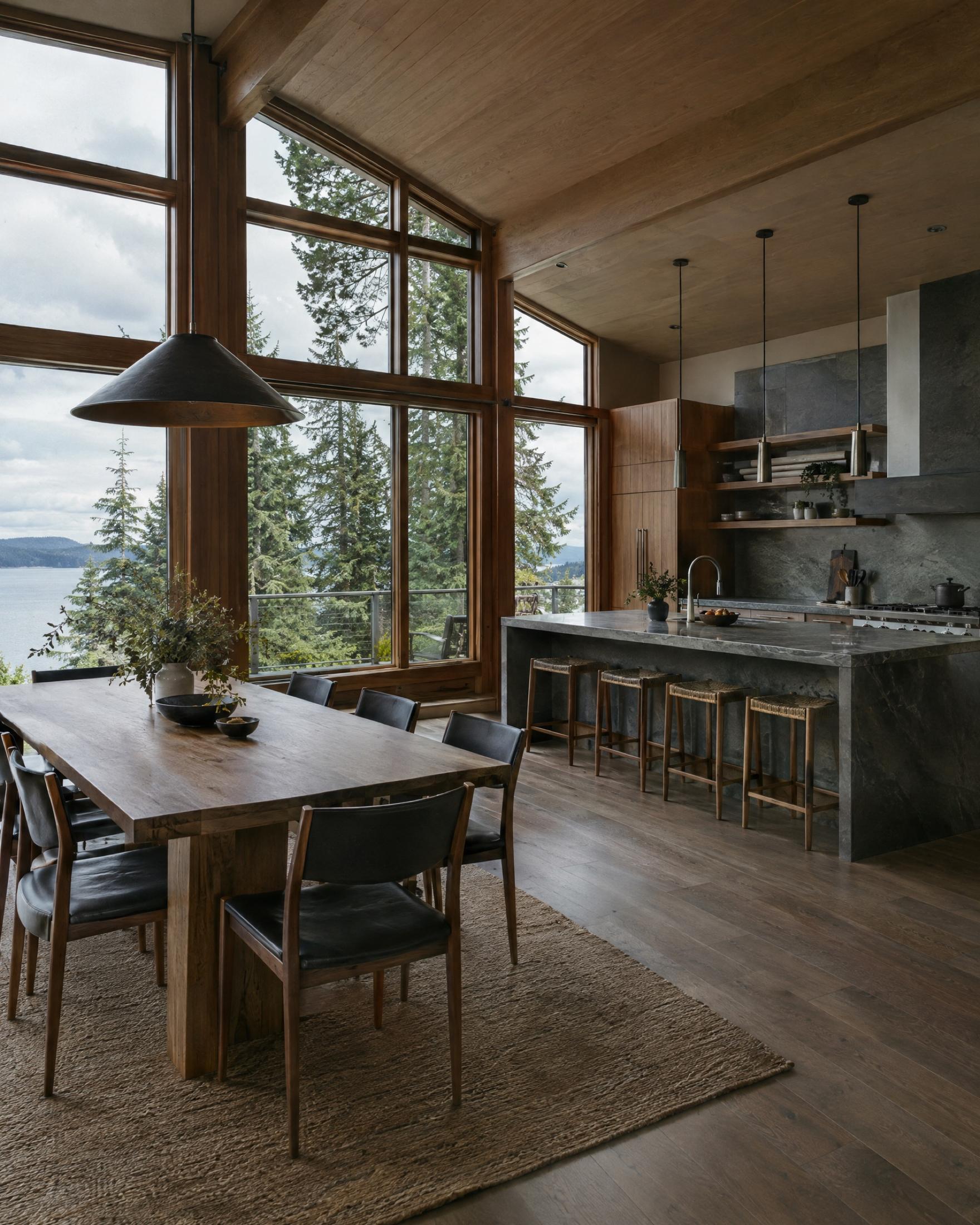
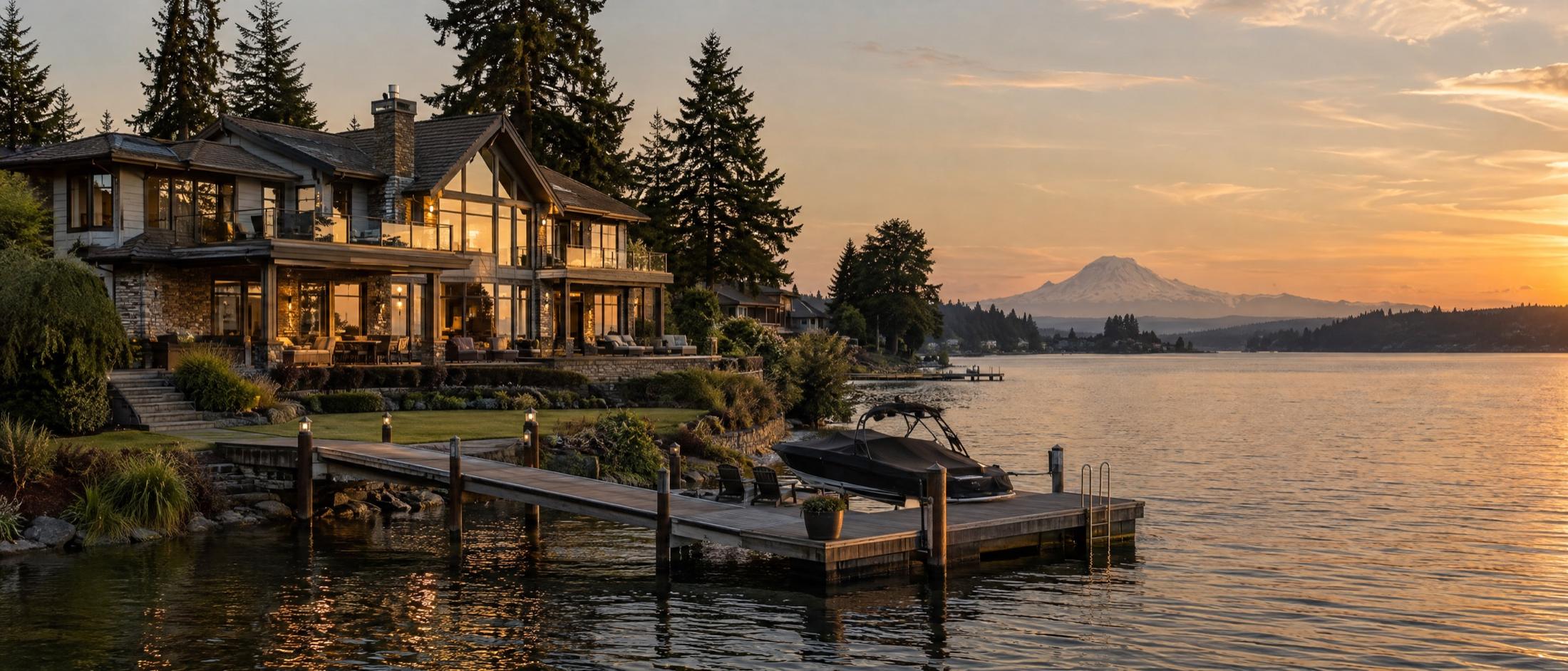
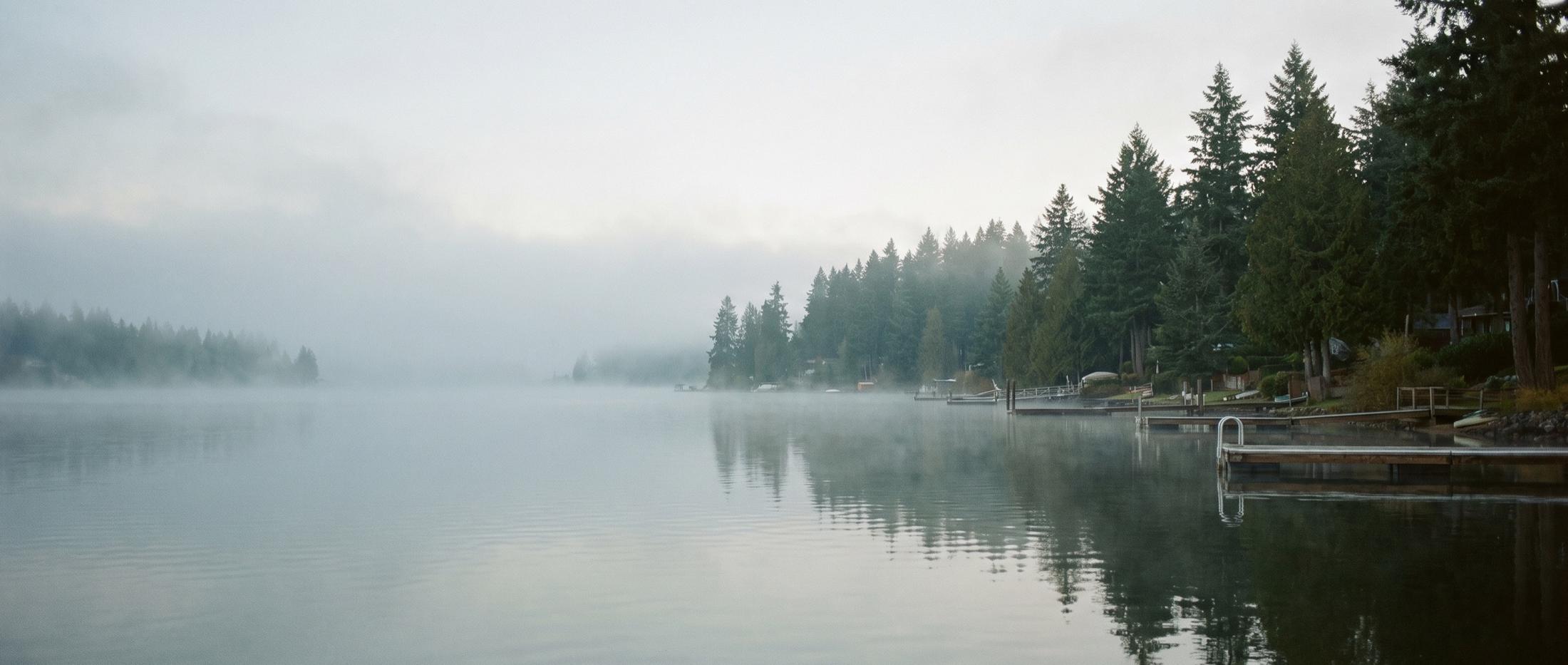
“A lakefront home seen in January can look very different in July.”
What is the commute like from Bonney Lake?
It depends on one hill, and on which way you turn at the bottom of it.
Try it first
Before you commit to a house, drive the route at the hour you would really leave, on a weekday. Then drive home at the hour you would really come back. They are rarely mirror images.
Nearly every commute from the plateau starts on SR 410, which drops west down the hill into Sumner and meets SR 167. From there, SR 167 runs north toward Auburn, Kent, and Renton, or south a short way to SR 512, which crosses South Hill to I-5 at Lakewood. Tacoma is reachable either way. Households at the north end of Lake Tapps often head toward Auburn on local roads and skip the 410 hill entirely.
Drive times swing with the hour and the weather, so I won’t quote you one. What I will do is help you narrow the map to homes that make sense for where you need to be, and point out the streets where getting onto the highway at 7 a.m. is its own small project.
For Seattle and Tacoma commuters, Sounder commuter rail stops in Sumner, at the foot of the hill. Check Sound Transit for current schedules and station parking before you count on it.
Winter is the other variable. The plateau sits well above the valley, and snow and ice can stick on the hill while it’s only raining in Sumner. A house near SR 410 on a main road is a different winter morning than one at the end of a long, steep private drive.
Which school district serves Bonney Lake?
Mostly Sumner-Bonney Lake. Check the address, not the city name.
Most of Bonney Lake is in the Sumner-Bonney Lake School District, which runs two comprehensive high schools, Bonney Lake High School and Sumner High School, along with middle and elementary schools across the plateau and the valley. Which of those a given address feeds into is set by attendance boundaries the district publishes and occasionally adjusts.
District lines don’t follow city limits, and some areas around the plateau are served by other districts. Parts of the Lake Tapps area are in the Dieringer School District, which covers the elementary and middle grades, and some addresses toward Buckley fall in the White River School District. Because boundaries can change and a single road can split, the reliable step is to enter the exact address in the district’s boundary lookup, or call the district office, before you write an offer.
Programs and bus routes are questions for the schools themselves, and I’ll point you to the right office. I don’t rank schools or steer buyers toward or away from neighborhoods because of them. Fair housing law treats steering seriously, and the districts have better information than any agent.
What should I check on a newer-construction home?
Six things to do on a house in a plateau subdivision or planned community, finished or not.
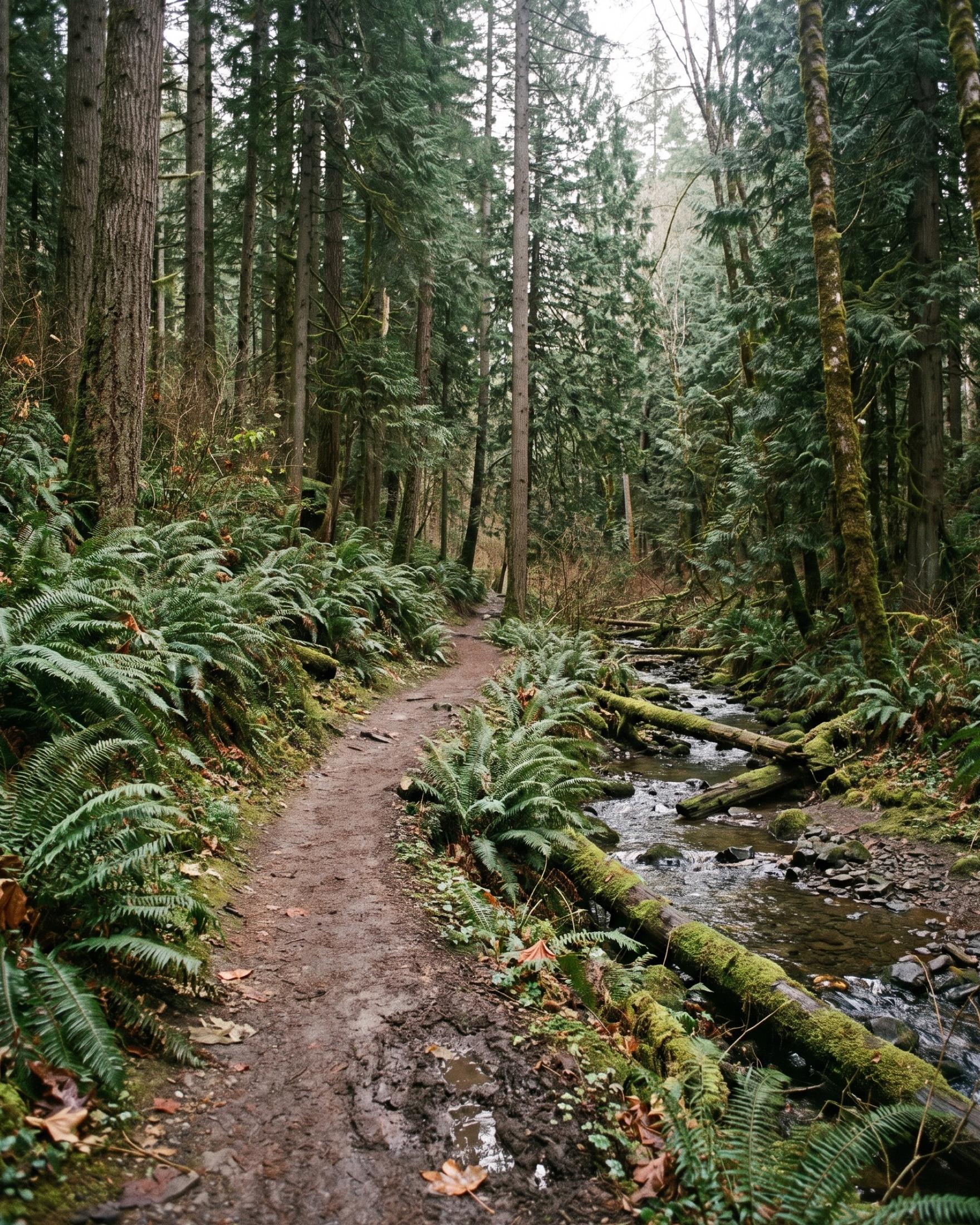
Much of what’s for sale in and around Bonney Lake was built recently, and some of it is still going up. New houses have their own set of problems.
- Get your own inspection
- Even on a brand-new house. Building department inspections check code minimums at set stages, and the builder’s walk-through is run by the builder. If you’re buying before the house is finished, ask about a pre-drywall inspection too.
- Read the builder’s warranty
- Know what it covers and how to file a claim. Put a reminder on your calendar for a walk-through before the first year runs out, so small issues get fixed while they are still the builder’s to fix.
- Watch the water
- Winters here are long and wet. Look at the grading and where the downspouts send the water. Check the crawlspace for standing water and ask whether there is a sump pump. New sod can hide a lot.
- Read the covenants and the budget
- New HOAs are sometimes still run by the developer. Ask when control passes to homeowners, what the reserves look like, and what dues are expected to do once the builder is gone.
- Bring your broker to the first visit
- Builders use their own purchase contracts, with deadlines and deposit terms that differ from the standard forms. Many builders also expect your broker to register you on your first trip to the sales office.
- Look at what’s next door
- Vacant land nearby may already be planned for another phase of houses or for commercial use. City and county planning maps will tell you more than the sales office.
How does buying with Austin work?
It starts with a written agreement and a map.
Washington requires a written agreement between a buyer and their broker that spells out the services and how the broker is paid. We go through it together at the start, line by line, and you’ll get the state’s pamphlet on real estate brokerage in Washington. Then we set the search: where on the plateau, which school district, on the lake or near it or away from it, new or resale, and the full monthly payment you’re comfortable with, taxes and dues included.
Then come showings. For each home that makes your short list I pull what I can find on the parcel, the association, the permits, and the recent comparable sales, so your offer rests on more than a feeling. When we write, I explain every term and the choices behind it. Timelines vary with the financing and the seller’s plans, and I’ll tell you what’s typical for your situation and what could change it.
If you’re relocating from another state, Homexa®, a network of 300+ agents across 25 states, can connect you with an agent for the home you’re leaving while I handle the one you’re buying here.
P.S. If you’re looking at Bonney Lake or Lake Tapps, call me. I’ll ask about your drive, your schools, and how you feel about water before we look at a single listing.
Call 206.940.0942, or write me a letter.